
This guide contains affiliate links. If you buy through a link, we may earn a small commission at no extra cost to you. Learn more in our affiliate disclosure.
Do Anti-Snoring Mouthguards and Mouthpieces Actually Work?
Fri Aug 21 2026 · snoring, mouthguard, mandibular-device, evidence-based
Do Anti-Snoring Mouthguards and Mouthpieces Actually Work?
If you’ve searched for a snoring fix, you’ve seen “anti-snoring mouthguards” and “mandibular advancement devices” (MADs) advertised everywhere. They’re the bedside-table version of what dentists call oral appliances — a device worn in the mouth at night that can genuinely help some snorers.
But do they actually work, and which ones are worth considering? Here’s the evidence-based picture. This is general information, not medical or dental advice — a sleep assessment or a dentist can tell you what fits your situation.
What a mouthguard/MAD actually does
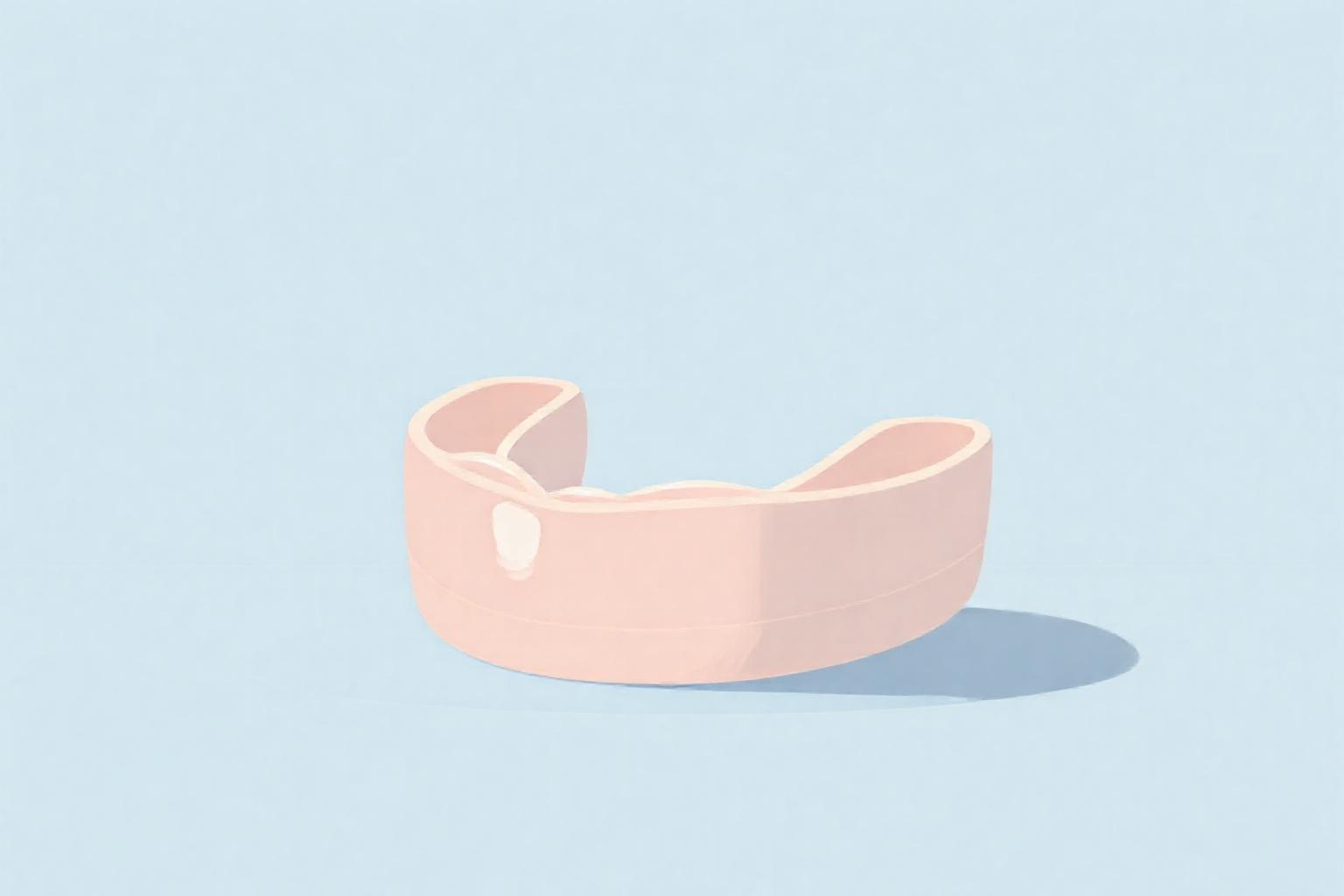
A mandibular advancement device fits over the teeth and gently holds your lower jaw slightly forward while you sleep. This moves the base of the tongue forward too, keeping the airway more open — which reduces the vibration of the soft tissues that causes snoring.
There are two broad types:
- Custom-made devices, fitted by a dentist from a mould of your teeth.
- Over-the-counter / boil-and-bite devices you mould yourself at home.
What the evidence says
Oral appliances are a recognised treatment, but the evidence is nuanced:
- The UK’s NICE and sleep-medicine guidance recognise mandibular advancement devices as a treatment option for obstructive sleep apnoea (OSA) and snoring, particularly for mild to moderate cases.
- They work best when people actually wear them every night — compliance matters as much as the device itself.
- A custom-fitted device from a dentist is generally more effective and more comfortable than an over-the-counter one, because it’s made to your bite.
- MADs help snoring, but they are not a replacement for CPAP in moderate or severe sleep apnoea, where CPAP remains the gold standard.
Sources: NICE medical-technology guidance on mandibular advancement splints; NHS sleep apnoea treatment guidance.
The honest limits
- They don’t fix every snorer. Snoring has many causes (sleep position, weight, alcohol, anatomy). If mouth or jaw anatomy isn’t the driver, a device may not help.
- Comfort and jaw/joint soreness are the main reasons people stop.
- See a dentist or GP first if you have gum disease, loose teeth, or jaw problems — a device can worsen these.
What to look for if you buy one
- Fits your mouth properly and is comfortable enough to wear nightly.
- Adjustable, so the jaw can be advanced gradually (gentler than a fixed, over-aggressive setting).
- Cleaning-friendly (you’ll wear it every night).
- Backed by a sleep assessment where possible — the NHS advises confirming sleep apnoea severity before choosing a treatment.
A structured alternative: not everyone wants a device. An exercise-based programme for milder snoring is another option some people prefer — see our recommendation in the Ways to Stop Snoring guide. (Affiliate link: we may earn a commission at no extra cost to you.)
The one-line summary
Anti-snoring mouthguards (MADs) are a genuine, evidence-supported option — especially custom-fitted ones and for mild-to-moderate cases — but they aren’t a cure-all. Confirm the cause with a sleep assessment, prioritise a comfortable, adjustable, properly-fitting device, and remember CPAP remains the standard for more severe sleep apnoea.
Sources
- NICE — Mandibular advancement splints for obstructive sleep apnoea and snoring (medical-technologies guidance): https://www.nice.org.uk/guidance/mtg40
- NHS — Obstructive sleep apnoea (symptoms and treatment): https://www.nhs.uk/conditions/sleep-apnoea/
- NHS — Snoring (treatment and self-help): https://www.nhs.uk/conditions/snoring/
This article is for general information and is not medical or dental advice. Always consult a qualified healthcare professional before treating a sleep condition.