
How to Choose an Anti-Snoring Mouthpiece: What the Evidence Says
Wed Aug 19 2026 · anti-snoring-mouthpiece, mandibular-advancement-device, snoring-solutions
How to Choose an Anti-Snoring Mouthpiece: What the Evidence Says
If side-sleeping and lifestyle changes haven’t fixed your snoring, the next step many people reach for is an “anti-snoring mouthpiece” — also called a mandibular advancement device (MAD) or mandibular splint (MAS). These dental devices are a genuinely recommended treatment, but the range of products on the market is enormous and quality varies a lot. This guide explains what they actually do, who they’re right for, and what to look for — based on authoritative UK guidance.
First: snoring with pauses in breathing, gasping, or severe daytime sleepiness can be a sign of obstructive sleep apnoea (OSA), a medical condition. See a GP — don’t self-treat with a mouthpiece bought online.
What a mandibular advancement device actually does
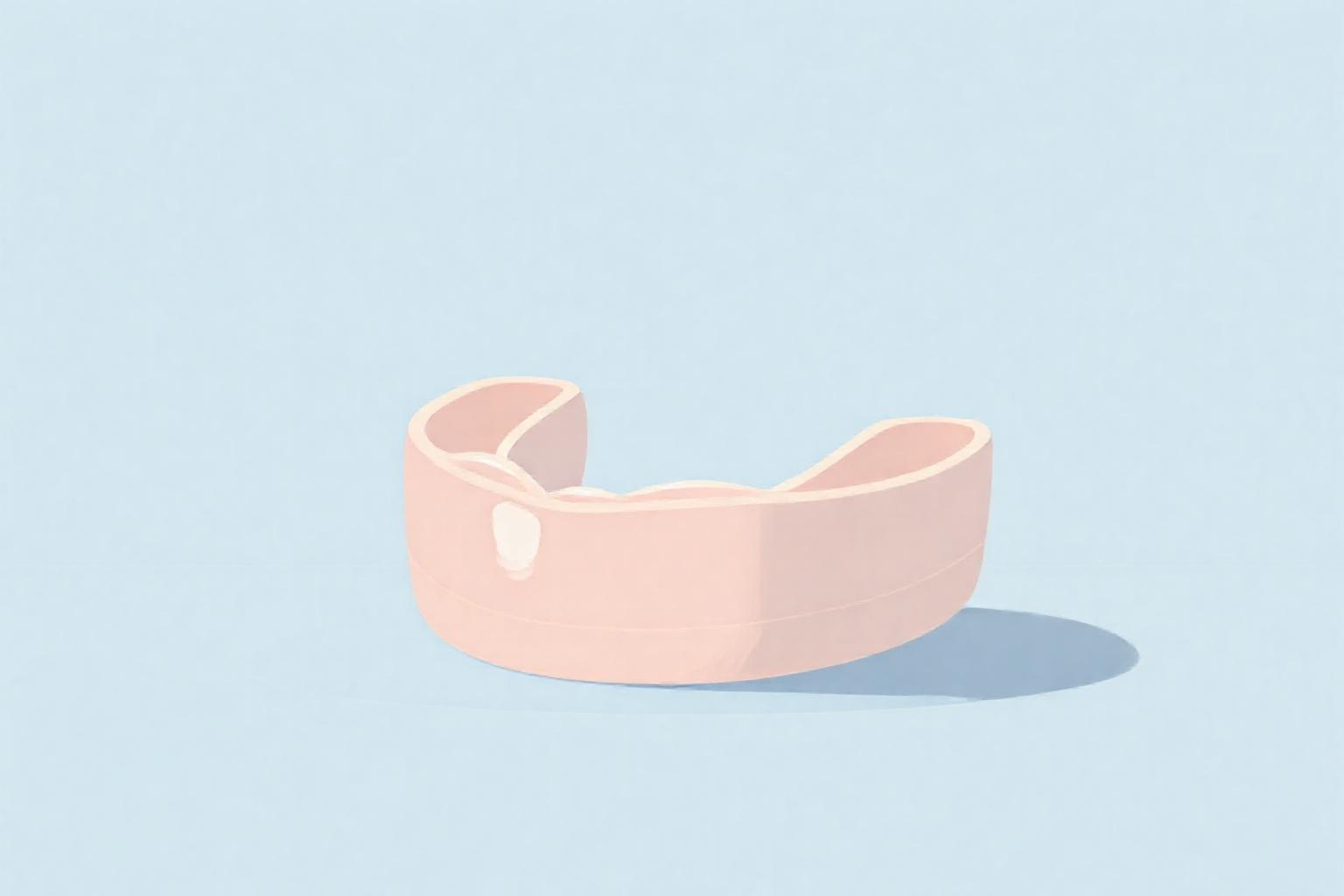
A MAD is a dental appliance made of plates that fit over your upper and lower teeth, worn only while you sleep. It works by holding your jaw (mandible) and attached tongue forward, which keeps your upper airway more open and reduces how much the airway collapses during sleep.
According to the UK’s NICE Clinical Knowledge Summaries, these devices are recommended for people who snore or have mild OSA with normal daytime alertness, and as an alternative for people who cannot tolerate CPAP, do not respond to it, or prefer a dental option.
Sources: NICE CKS, “Obstructive sleep apnoea syndrome” (2025); Guy’s & St Thomas’ NHS Foundation Trust.
Is a mouthpiece right for you?
MADs are not for everyone. NICE lists people for whom they may not be suitable:
- Active gum (periodontal) disease
- Untreated dental decay
- Few or no teeth
- People who have generalised tonic-clonic seizures
If you have any of these, or missing/weak teeth, talk to a dentist (ideally one trained in dental sleep medicine) before buying anything.
Do they actually work?
The evidence is real. NICE cites a meta-analysis of 34 randomised controlled trials (over 1,300 participants) that found a clinical benefit and a reduction in the apnoea-hypopnoea index (AHI) with these devices.
That said, “evidence works in trials” and “every over-the-counter product works” are different things. Custom-made, titratable appliances made by a dental specialist or maxillofacial surgeon are flagged as potentially the most effective — and the fit is the single biggest factor in both comfort and effectiveness.
Stock (“boil and bite”) versus custom-fit
| Type | Cost | Fit | Verdict (evidence-based) |
|---|---|---|---|
| Stock / one-size | Low | Poor fit, may slip | Least reliable |
| “Boil and bite” (soften in hot water) | Low–mid | Better than stock, still limited | An affordable starting point, but fit can be imperfect |
| Custom-made / titratable (via dentist) | Higher | Best fit, adjustable | Potentially most effective (NICE) |
A poorly-fitting device can cause jaw ache, excess salivation, or tooth movement — and may simply not work. That’s why the fit matters more than the brand.
What to look for in a mouthpiece
- How it holds the jaw — the design must keep the jaw forward, not just cover the teeth.
- Adjustability — being able to advance the jaw gradually (“titratable”) tends to give better tolerance than a fixed position.
- Fit and materials — look for something that fits your teeth properly and uses medical-grade, non-toxic materials.
- Who made it — custom devices made with dental input are the ones NICE highlights as potentially most effective.
- Side effects you should expect — some initial jaw soreness and salivation are common in the first weeks; a properly fitted device should settle.
The honest bigger picture
A mouthpiece treats mild OSA and snoring. If your snoring is severe, you gas for breath, or you’re excessively sleepy during the day, the evidence-backed first-line treatment for moderate-to-severe OSA is CPAP — a mask that keeps the airway open with air pressure. This is prescribed, not bought over the counter, and is arranged through your GP and a sleep clinic.
The practical rule: try a well-reviewed over-the-counter mouthpiece as a low-cost experiment if your snoring is simple, but see a professional if it’s severe, if you have dental problems, or if a mouthpiece isn’t working.
Summary
- MADs hold your jaw forward to open the airway — a NICE-recommended treatment for snoring and mild OSA.
- They’re not for people with active gum disease, decay, or few teeth.
- Fit beats brand — custom/titratable devices are potentially most effective; over-the-counter ones are a cheaper, less reliable starting point.
- Rule out sleep apnoea first — see a GP if you snore loudly with pauses, gasp, or are very sleepy by day.
Sources
- NICE Clinical Knowledge Summaries — Obstructive sleep apnoea syndrome: Management (revised November 2025): https://cks.nice.org.uk/topics/obstructive-sleep-apnoea-syndrome/management/management/
- Guy’s & St Thomas’ NHS Foundation Trust — Mandibular repositioning appliance (MRA): https://www.guysandstthomas.nhs.uk/health-information/mandibular-repositioning-appliance-mra
This article is for general information and is not a substitute for professional medical or dental advice.